


How to choose an encoder?
Oct 29, 2025
Leave a message
When it comes to industrial automation and motion control systems, encoders play a pivotal role. As an encoder supplier, I understand the challenges customers face in choosing the right encoder for their specific applications. This blog aims to provide a comprehensive guide on how to choose an encoder, taking into account various factors and considerations.
Understanding Encoders
Before delving into the selection process, it's essential to have a basic understanding of what encoders are and how they work. Encoders are devices that convert mechanical motion into electrical signals, providing information about position, speed, and direction. They are widely used in a variety of industries, including manufacturing, robotics, automotive, and aerospace.
There are two main types of encoders: incremental and absolute. Incremental encoders generate a series of pulses as the shaft rotates, providing relative position information. Absolute encoders, on the other hand, provide a unique digital code for each position, allowing for absolute position measurement.

Factors to Consider When Choosing an Encoder
Application Requirements
The first step in choosing an encoder is to understand the specific requirements of your application. Consider the following factors:
- Positioning Accuracy: Determine the level of accuracy required for your application. Higher accuracy encoders are typically more expensive, so it's important to balance accuracy with cost.
- Speed and Resolution: Consider the maximum speed at which the encoder will operate and the resolution required to achieve the desired level of accuracy. Higher resolution encoders can provide more precise position information but may have limitations in terms of speed.
- Environmental Conditions: Evaluate the environmental conditions in which the encoder will be used, including temperature, humidity, dust, and vibration. Choose an encoder that is designed to withstand these conditions to ensure reliable operation.
- Mounting and Compatibility: Consider the mounting requirements of your application and ensure that the encoder you choose is compatible with your existing equipment.
Encoder Type
As mentioned earlier, there are two main types of encoders: incremental and absolute. The choice between these two types depends on the specific requirements of your application.
- Incremental Encoders: Incremental encoders are suitable for applications where relative position information is sufficient. They are less expensive than absolute encoders and are commonly used in applications such as conveyor systems, packaging machines, and CNC machines.
- Absolute Encoders: Absolute encoders are ideal for applications where absolute position information is required, such as robotics, automated guided vehicles (AGVs), and precision manufacturing. They provide a unique digital code for each position, allowing for accurate position measurement even after power loss.
Output Signal
Encoders can provide different types of output signals, including analog, digital, and serial. The choice of output signal depends on the requirements of your control system.
- Analog Output: Analog encoders provide a continuous voltage or current signal proportional to the position or speed of the shaft. They are commonly used in applications where a simple and cost-effective solution is required.
- Digital Output: Digital encoders provide discrete signals in the form of pulses or binary codes. They are more accurate and reliable than analog encoders and are commonly used in applications where high precision is required.
- Serial Output: Serial encoders provide a digital signal in a serial format, allowing for easy communication with a control system. They are commonly used in applications where multiple encoders need to be connected to a single controller.
Electrical Characteristics
In addition to the output signal, it's important to consider the electrical characteristics of the encoder, including power supply requirements, signal voltage levels, and noise immunity.
- Power Supply: Ensure that the encoder you choose is compatible with the power supply available in your application. Most encoders operate on a 5V or 24V power supply.
- Signal Voltage Levels: Consider the signal voltage levels required by your control system and ensure that the encoder you choose can provide the appropriate signals.
- Noise Immunity: Evaluate the noise immunity of the encoder to ensure reliable operation in noisy environments. Look for encoders with built-in filtering and shielding to reduce the effects of electrical interference.
Examples of Encoders
To illustrate the different types of encoders available, here are some examples of encoders that we offer:
- EQI 1331 32 62S12-78 ID 811814-54 Encoder: This is an incremental encoder with a high resolution of up to 2048 pulses per revolution. It is suitable for applications where high precision is required, such as robotics and CNC machines.
- OIH48-2500P8-L6-5V TS5214N8599 Rotary Encoder: This is an absolute encoder with a resolution of up to 2500 pulses per revolution. It is suitable for applications where absolute position information is required, such as automated guided vehicles (AGVs) and precision manufacturing.
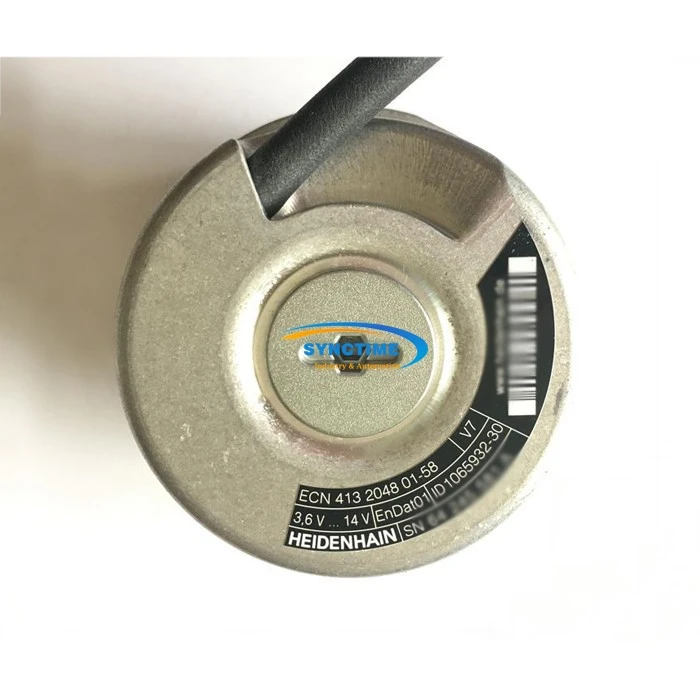
- ECN 413 2048 01-58 ID 1065932-30 Encoder: This is a high-performance encoder with a resolution of up to 2048 pulses per revolution. It is suitable for applications where high speed and accuracy are required, such as aerospace and automotive.
Conclusion
Choosing the right encoder for your application is crucial to ensure reliable and accurate operation. By considering the factors discussed in this blog, you can make an informed decision and select an encoder that meets your specific requirements. If you have any questions or need further assistance, please don't hesitate to contact us. We are here to help you find the perfect encoder for your application.
References
- "Encoder Handbook," published by the Encoder Manufacturers Association (EMA).
- "Motion Control Handbook," published by the Motion Control Association (MCA).
- "Industrial Automation Handbook," published by the International Society of Automation (ISA).
Send Inquiry