


How to calculate the focal length of a cylindrical lens?
Jan 19, 2026
Leave a message
Hey there! As a cylinder supplier, I often get asked about all sorts of technical stuff related to our products. One question that comes up quite a bit is how to calculate the focal length of a cylindrical lens. So, I thought I'd take some time to break it down for you in a way that's easy to understand.
First off, let's talk a bit about what a cylindrical lens is. A cylindrical lens is a type of lens that has a curved surface in one direction and a flat surface in the other. This unique shape allows it to focus light in only one plane, which makes it super useful in a variety of applications, like laser beam shaping, barcode scanning, and microscopy.
Now, onto the main event - calculating the focal length. There are a few different methods you can use, depending on what information you have available. Let's start with the thin lens formula, which is probably the most well-known method.
The thin lens formula is given by:
1/f = (n - 1) * (1/R1 - 1/R2)
Where:
- f is the focal length of the lens
- n is the refractive index of the lens material
- R1 is the radius of curvature of the first surface of the lens
- R2 is the radius of curvature of the second surface of the lens
To use this formula, you'll need to know the refractive index of the lens material and the radii of curvature of both surfaces. The refractive index is a property of the material and can usually be found in a materials database or provided by the manufacturer. The radii of curvature can be measured using a tool called a spherometer, which is designed to measure the curvature of spherical and cylindrical surfaces.
Let's say you have a cylindrical lens made of glass with a refractive index of 1.5. The radius of curvature of the curved surface is 50 mm, and the flat surface has an infinite radius of curvature (since it's flat). Plugging these values into the thin lens formula, we get:
1/f = (1.5 - 1) * (1/50 - 1/∞)
1/f = 0.5 * (1/50 - 0)
1/f = 0.5 * 1/50
1/f = 0.01
f = 100 mm
So, the focal length of this cylindrical lens is 100 mm.
Another method you can use to calculate the focal length is the lens maker's formula, which is a more general form of the thin lens formula. The lens maker's formula takes into account the thickness of the lens and the distance between the two surfaces.
The lens maker's formula is given by:
1/f = (n - 1) * [(1/R1 - 1/R2) + (n - 1) * d / (n * R1 * R2)]
Where:
- d is the thickness of the lens at its center
To use this formula, you'll need to know the refractive index of the lens material, the radii of curvature of both surfaces, and the thickness of the lens at its center. The thickness can be measured using a micrometer or a caliper.
Let's say you have the same cylindrical lens as before, but this time it has a thickness of 5 mm at its center. Plugging these values into the lens maker's formula, we get:
1/f = (1.5 - 1) * [(1/50 - 1/∞) + (1.5 - 1) * 5 / (1.5 * 50 * ∞)]
1/f = 0.5 * [(1/50 - 0) + 0.5 * 5 / (1.5 * 50 * ∞)]
1/f = 0.5 * (1/50 + 0)
1/f = 0.5 * 1/50
1/f = 0.01
f = 100 mm
As you can see, in this case, the thin lens formula and the lens maker's formula give the same result. This is because the lens is relatively thin, and the effect of the thickness on the focal length is negligible.
In addition to these theoretical methods, you can also measure the focal length of a cylindrical lens experimentally. One way to do this is to use a collimated light source, such as a laser, and a screen.
Here's how the experiment works:
- Set up the collimated light source so that it shines through the cylindrical lens and onto the screen.
- Move the screen back and forth until you find the position where the light is focused into a sharp line. This is the focal plane of the lens.
- Measure the distance between the lens and the screen at the focal plane. This distance is the focal length of the lens.
It's important to note that the accuracy of this method depends on the quality of the collimated light source and the precision of your measurements.
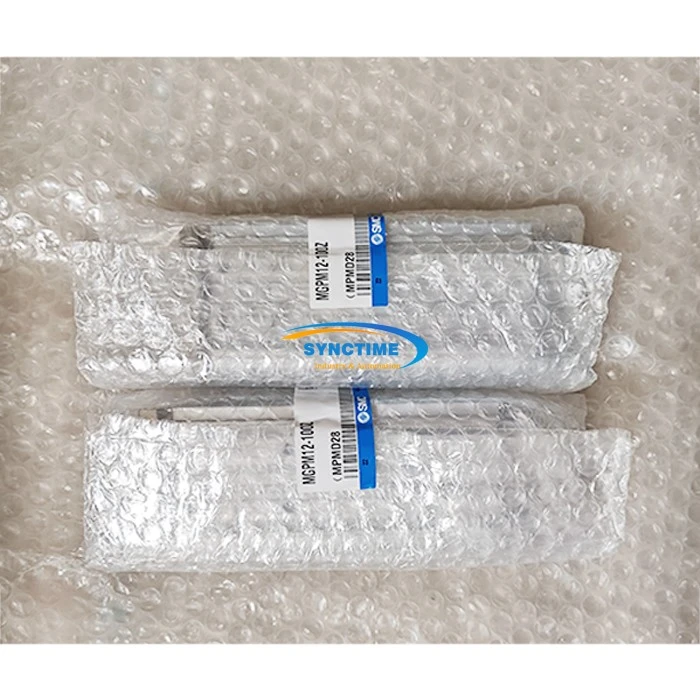
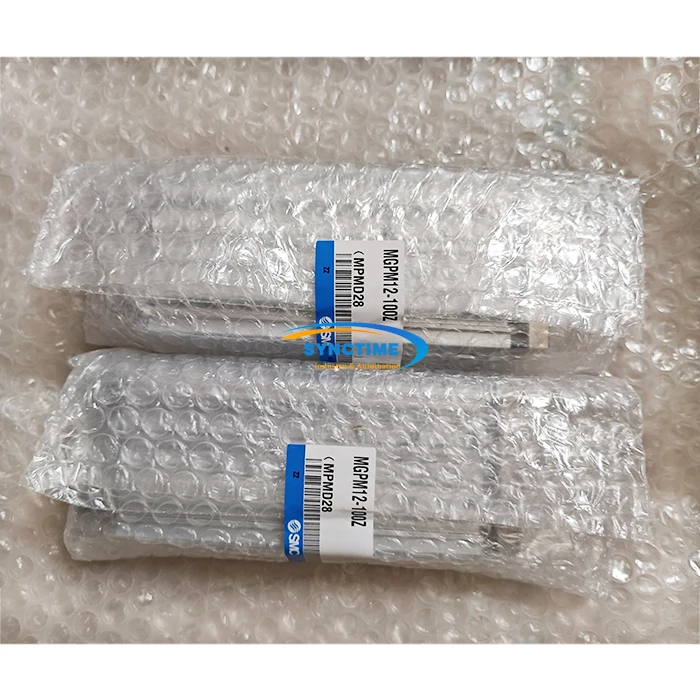
Now, I'd like to take a moment to mention some of the cylinders we offer as a supplier. We have a wide range of cylinders to meet different needs, including the CD85N25-175-B Cylinder, the CD85N25-200C-B Cylinder, and the MGPM12-100Z Cylinder. These cylinders are known for their high quality, reliability, and performance.
If you're in the market for cylinders or have any questions about our products, don't hesitate to reach out. We're here to help you find the right solution for your needs. Whether you're a small business or a large corporation, we can work with you to provide the cylinders you need at a competitive price.
In conclusion, calculating the focal length of a cylindrical lens can be done using theoretical methods like the thin lens formula and the lens maker's formula, or experimentally using a collimated light source and a screen. Each method has its own advantages and disadvantages, and the choice of method depends on the available information and the level of accuracy required. And if you're looking for high-quality cylinders, we've got you covered. So, feel free to contact us for more information and let's start a conversation about your procurement needs.
References:
- Hecht, E. (2017). Optics (5th ed.). Pearson.
- Smith, W. J. (2007). Modern Optical Engineering: The Design of Optical Systems (4th ed.). McGraw-Hill.
Send Inquiry