


How does the holding current affect the contactor's operation?
Jan 20, 2026
Leave a message
As a seasoned contactor supplier, I've witnessed firsthand the pivotal role that holding current plays in the operation of contactors. In this blog, I'll delve into the intricacies of how holding current affects a contactor's performance, drawing on my extensive experience in the industry.
Understanding Contactor Basics
Before we explore the impact of holding current, let's briefly review what a contactor is. A contactor is an electrically controlled switch used for switching an electrical power circuit. It consists of a coil, contacts, and an enclosure. When the coil is energized, it creates a magnetic field that pulls the contacts together, closing the circuit. When the coil is de - energized, the contacts open, interrupting the circuit.
The Concept of Holding Current
Holding current refers to the minimum current required to keep the contacts of a contactor closed after the initial closing operation. Once the contactor has been energized and the contacts have closed, a certain amount of current must flow through the coil to maintain the magnetic field strong enough to hold the contacts in the closed position.
Effects on Contactor Reliability
One of the most significant ways holding current affects contactor operation is in terms of reliability. If the holding current is too low, the magnetic field generated by the coil may not be sufficient to keep the contacts firmly closed. This can lead to intermittent contact, which causes arcing at the contact points. Arcing can damage the contacts over time, reducing their lifespan and increasing the risk of contact failure.
For example, in industrial applications where contactors are used to control large motors, intermittent contact due to insufficient holding current can result in motor stalling or even damage. On the other hand, if the holding current is too high, it can cause overheating of the coil. Overheating can degrade the insulation of the coil, leading to short - circuits and ultimately, contactor failure.
Impact on Energy Consumption
Holding current also has a direct impact on energy consumption. A contactor with a high holding current will consume more electrical energy during its operation. In large - scale industrial settings where numerous contactors are in use, this can translate into significant energy costs over time.
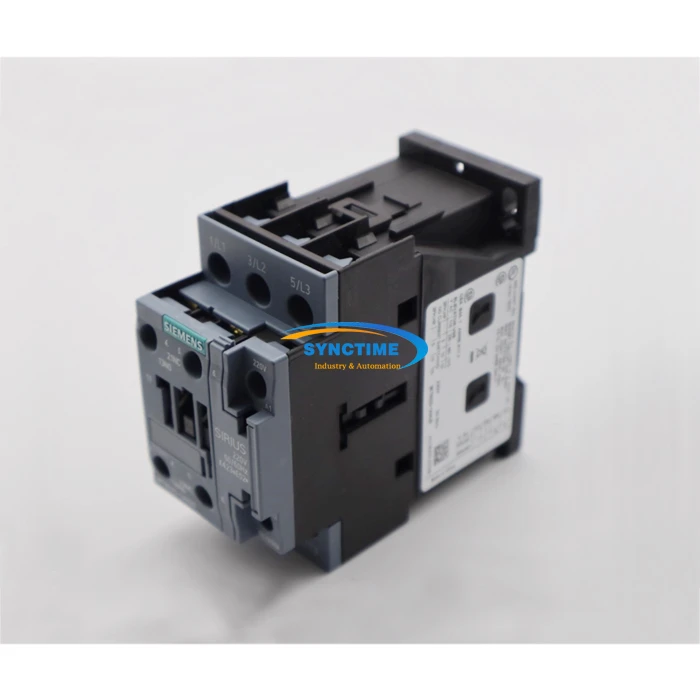
As a contactor supplier, we offer a range of contactors with different holding current requirements. For instance, our 3RT6025 - 1AN20 3RT6026 - 1AN20 Contactor is designed with an optimized holding current to balance between reliable operation and energy efficiency. By carefully selecting a contactor with the appropriate holding current for a specific application, users can reduce their energy consumption without sacrificing performance.
Influence on Response Time
The holding current can also affect the response time of a contactor. A contactor with a higher holding current may have a faster response time when it comes to maintaining the closed position. However, this needs to be balanced against the potential for increased energy consumption and overheating.
In applications where rapid response is crucial, such as in automated control systems, a contactor with a well - calibrated holding current can ensure that the contacts remain closed quickly and reliably. Our S - N220 Magnetic Contactor is engineered to provide a fast and stable response, thanks to its precisely defined holding current.
Compatibility with Control Systems
Another aspect to consider is the compatibility of the holding current with the control system. Different control systems may have different output capabilities in terms of current. If the holding current of a contactor is not compatible with the control system, it can lead to improper operation.
For example, if a control system is designed to output a relatively low current, and a contactor with a high holding current is used, the control system may not be able to supply enough current to keep the contacts closed. This can result in the contactor opening unexpectedly, disrupting the operation of the entire system.
Selecting the Right Holding Current
When selecting a contactor, it's essential to choose the appropriate holding current based on the specific application requirements. Factors such as the load type, operating environment, and control system capabilities should all be taken into account.
For light - duty applications, such as controlling small lighting circuits, a contactor with a lower holding current may be sufficient. In contrast, heavy - duty applications, like controlling large industrial machinery, may require a contactor with a higher holding current to ensure reliable operation. Our S - N180 Magnetic Contactor is suitable for a wide range of heavy - duty applications, with a holding current that is carefully calibrated to meet the demands of such environments.
Conclusion
In conclusion, the holding current is a critical factor that significantly affects the operation of contactors. It impacts reliability, energy consumption, response time, and compatibility with control systems. As a contactor supplier, we understand the importance of providing contactors with the right holding current for different applications.
If you're in the market for high - quality contactors and need expert advice on selecting the appropriate holding current for your specific needs, we're here to help. Contact us to start a procurement discussion and find the perfect contactor solution for your project.

References
- "Electrical Contactors: Principles, Applications, and Selection", Electrical Engineering Handbook
- "Industrial Control Systems: Design and Operation", Industrial Automation Journal
Send Inquiry