


How does an inverter work in a hydro - power system?
Nov 25, 2025
Leave a message
In the realm of hydro - power systems, inverters play a pivotal role in ensuring efficient and reliable power generation. As an inverter supplier, I've witnessed firsthand the importance of these devices in optimizing the performance of hydro - power plants. In this blog, I'll delve into the inner workings of inverters in hydro - power systems, exploring their functions, components, and the benefits they bring.
Understanding Hydro - Power Systems
Before we dive into how inverters work, it's essential to have a basic understanding of hydro - power systems. Hydro - power is a renewable energy source that harnesses the energy of flowing or falling water to generate electricity. A typical hydro - power system consists of a dam or a water source, a turbine, a generator, and a control system.
Water is stored in a reservoir behind the dam. When the water is released, it flows through penstocks and strikes the blades of the turbine, causing it to spin. The spinning turbine is connected to a generator, which converts the mechanical energy of the turbine into electrical energy. However, the electrical energy generated by the generator is often in the form of alternating current (AC) with variable frequency and voltage, depending on the water flow and turbine speed.
The Role of Inverters in Hydro - Power Systems
This is where inverters come into play. An inverter is an electronic device that converts direct current (DC) into alternating current (AC). In a hydro - power system, inverters have several crucial functions:
Frequency and Voltage Regulation
The electrical output of a hydro - power generator can have variable frequency and voltage due to fluctuations in water flow and turbine speed. Inverters are used to regulate the frequency and voltage of the generated electricity to match the requirements of the power grid. They ensure that the electricity supplied to the grid is stable and within the acceptable range of frequency (usually 50 or 60 Hz) and voltage.
Power Factor Correction
Power factor is a measure of how effectively electrical power is being used. A low power factor can result in increased energy losses and reduced efficiency. Inverters can improve the power factor of the hydro - power system by adjusting the phase relationship between the voltage and current. This helps to reduce energy losses and improve the overall efficiency of the power generation process.
Grid Connection
Inverters enable the connection of hydro - power systems to the electrical grid. They ensure that the electricity generated by the hydro - power plant can be safely and efficiently integrated into the grid. Inverters also provide protection functions, such as over - voltage, under - voltage, over - current, and frequency protection, to prevent damage to the grid and the hydro - power system.
How Inverters Work
Now, let's take a closer look at how inverters work in a hydro - power system.
DC Input
The first step in the operation of an inverter is to obtain a DC input. In a hydro - power system, the DC input can be obtained from a rectifier, which converts the AC output of the generator into DC. The rectifier can be a simple diode rectifier or a more complex controlled rectifier, depending on the requirements of the system.
Inversion Process
Once the DC input is available, the inverter uses a series of electronic switches, such as insulated - gate bipolar transistors (IGBTs) or metal - oxide - semiconductor field - effect transistors (MOSFETs), to convert the DC into AC. These switches are controlled by a pulse - width modulation (PWM) controller.
The PWM controller generates a series of pulses with variable width. By controlling the width of these pulses, the inverter can control the amplitude and frequency of the output AC voltage. The switches are turned on and off at high frequencies, typically in the range of several kilohertz to tens of kilohertz, to create an AC waveform that closely resembles a sine wave.
Output Filtering
The AC output of the inverter may contain some harmonics and high - frequency noise due to the switching action of the electronic switches. To remove these harmonics and noise, an output filter is used. The output filter typically consists of inductors and capacitors, which smooth out the AC waveform and reduce the harmonic content.
Control and Monitoring
Inverters are also equipped with a control and monitoring system. This system constantly monitors the input and output parameters of the inverter, such as voltage, current, frequency, and temperature. It adjusts the operation of the inverter based on the monitored parameters to ensure optimal performance and protection.
Types of Inverters Used in Hydro - Power Systems
There are several types of inverters that can be used in hydro - power systems, each with its own advantages and disadvantages:
String Inverters
String inverters are the most common type of inverters used in small to medium - sized hydro - power systems. They are connected to a string of solar panels or hydro - power generators in series. String inverters are relatively simple and cost - effective, but they have some limitations. For example, if one panel or generator in the string fails, it can affect the performance of the entire string.
Central Inverters
Central inverters are used in large - scale hydro - power systems. They are designed to handle a large amount of power and are connected to multiple strings of generators. Central inverters offer high efficiency and are suitable for large - scale power generation. However, they are more expensive and require more complex installation and maintenance.
Micro - Inverters
Micro - inverters are small inverters that are installed on each individual hydro - power generator. They offer several advantages, such as maximum power point tracking (MPPT) for each generator, which can improve the overall efficiency of the system. Micro - inverters also provide better fault tolerance, as the failure of one inverter does not affect the performance of the other generators.
Examples of Inverters for Hydro - Power Systems
As an inverter supplier, we offer a wide range of inverters suitable for hydro - power systems. Some of our popular products include:
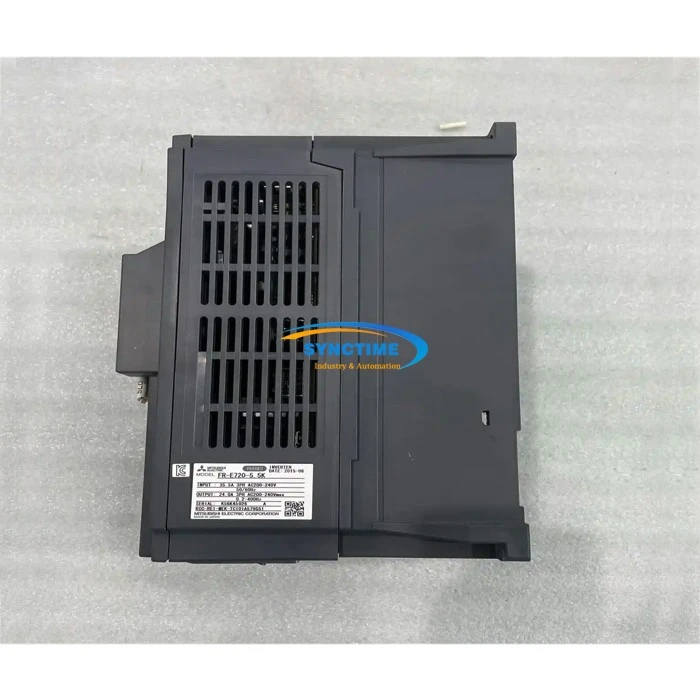

- FR - E720 - 5.5K FR - E720 - 7.5K Inverter: These inverters are known for their high efficiency and reliability. They are suitable for small to medium - sized hydro - power systems and offer excellent frequency and voltage regulation.
- 6SL3210 - 5BB11 - 2AV0 Inverter: This inverter is designed for large - scale hydro - power systems. It provides high - power output and advanced control features, such as power factor correction and grid connection capabilities.
- 22F - D2P5N103 Inverter AC Drive 0.75kw: This inverter is a compact and cost - effective solution for small - scale hydro - power applications. It offers precise control of the motor speed and power output, making it suitable for applications where energy efficiency is crucial.
Benefits of Using Inverters in Hydro - Power Systems
The use of inverters in hydro - power systems offers several benefits:
Increased Efficiency
By regulating the frequency and voltage, correcting the power factor, and optimizing the power output, inverters can significantly increase the efficiency of hydro - power systems. This leads to more electricity being generated from the same amount of water, reducing the cost of power generation.
Improved Grid Compatibility
Inverters ensure that the electricity generated by hydro - power systems is compatible with the power grid. They help to maintain the stability of the grid and prevent power quality issues, such as voltage sags and frequency fluctuations.
Enhanced System Reliability
Inverters provide protection functions, such as over - voltage, under - voltage, over - current, and frequency protection, which help to prevent damage to the hydro - power system and the grid. This enhances the reliability of the power generation process and reduces the risk of system failures.
Conclusion
Inverters are essential components in hydro - power systems. They play a crucial role in regulating the frequency and voltage of the generated electricity, correcting the power factor, and enabling grid connection. By using inverters, hydro - power systems can operate more efficiently, reliably, and in compliance with the requirements of the power grid.
If you are involved in a hydro - power project and are looking for high - quality inverters, we are here to help. Our team of experts can provide you with the right inverter solutions based on your specific requirements. Contact us today to start a discussion about your hydro - power inverter needs and explore how we can contribute to the success of your project.
References
- Chapman, S. J. (2012). Electric Machinery Fundamentals. McGraw - Hill.
- Dorf, R. C., & Bishop, R. H. (2016). Modern Control Systems. Pearson.
- Mohan, N., Undeland, T. M., & Robbins, W. P. (2012). Power Electronics: Converters, Applications, and Design. Wiley.
Send Inquiry