


How does an inverter control the speed of a motor?
Dec 22, 2025
Leave a message
Hey there! As an inverter supplier, I often get asked about how an inverter controls the speed of a motor. It's a super interesting topic, and I'm stoked to break it down for you.
First off, let's talk about what an inverter is. In simple terms, an inverter is a device that converts direct current (DC) into alternating current (AC). But it's not just any AC; it can control the frequency and voltage of the output AC power. And this ability to control frequency and voltage is the key to controlling the speed of a motor.
Motors, especially AC induction motors, are widely used in various industries. The speed of an AC induction motor is directly related to the frequency of the power supply. The basic formula for the synchronous speed of an AC induction motor is (N_s=\frac{120f}{P}), where (N_s) is the synchronous speed in revolutions per minute (RPM), (f) is the frequency of the power supply in Hertz (Hz), and (P) is the number of poles in the motor.
So, if we can change the frequency of the power supply to the motor, we can change its speed. That's where the inverter comes in. The inverter takes in DC power, usually from a battery or a rectified AC source, and then uses power electronics to create an AC output with a controllable frequency.
Let's dive a bit deeper into how the inverter does this. Inside the inverter, there are power semiconductor devices like insulated-gate bipolar transistors (IGBTs) or metal-oxide-semiconductor field-effect transistors (MOSFETs). These devices can switch on and off very quickly, allowing the inverter to create a pulse-width modulated (PWM) waveform.
PWM is a technique where the inverter rapidly switches the DC input voltage on and off to create an AC output. By varying the width of the pulses, the inverter can control the effective voltage and frequency of the output. For example, if we want to increase the speed of the motor, we increase the frequency of the PWM waveform. This effectively increases the frequency of the AC power supplied to the motor, and according to the speed formula, the motor speed will increase.
Now, let's talk about some of the inverters we offer. We have the 6SL3210 - 5BB11 - 2AV0 Inverter, which is a high - performance inverter suitable for a wide range of motor control applications. It has advanced control algorithms that allow for precise speed and torque control. Whether you're running a small conveyor belt or a large industrial pump, this inverter can handle it.
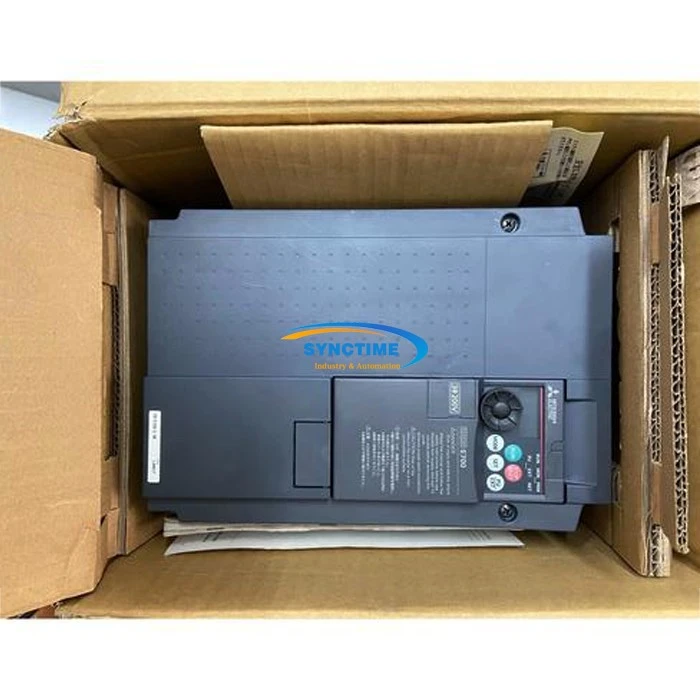

Another great option is the FR - E720 - 5.5K FR - E720 - 7.5K Inverter. These inverters are known for their energy efficiency and reliability. They come with built - in features like automatic energy optimization, which helps to reduce power consumption while still maintaining the required motor speed.
For smaller applications, we have the FR - E720 - 0.2K FR - E720 - 0.1K Inverter. These inverters are compact and cost - effective, making them ideal for controlling small motors in applications like fans, blowers, and small pumps.
In addition to frequency control, inverters can also provide other benefits when it comes to motor control. For example, they can control the starting and stopping of the motor smoothly. Instead of applying full voltage and frequency immediately, the inverter can gradually increase the frequency and voltage, reducing the mechanical stress on the motor and the connected equipment. This not only extends the lifespan of the motor but also improves the overall efficiency of the system.
Inverters can also provide protection for the motor. They can detect over - current, over - voltage, and under - voltage conditions and take appropriate action to protect the motor from damage. For example, if the current drawn by the motor exceeds a certain limit, the inverter can reduce the output voltage and frequency to prevent overheating and damage to the motor windings.
When it comes to choosing the right inverter for your motor, there are a few things to consider. First, you need to know the power rating of the motor. The inverter should have a power rating that is equal to or slightly higher than the motor's power rating to ensure proper operation. You also need to consider the type of motor you have, as different types of motors may require different control strategies.
Another important factor is the required speed range. If you need a wide speed range, you'll need an inverter that can provide a wide range of output frequencies. Some inverters also offer additional features like vector control, which can provide even more precise speed and torque control.
So, if you're in the market for an inverter to control the speed of your motor, we're here to help. We have a wide range of inverters to choose from, and our team of experts can assist you in selecting the right one for your application. Whether you're a small business owner looking to upgrade your equipment or a large industrial manufacturer, we can provide you with the solutions you need.
If you're interested in learning more about our inverters or have any questions about motor speed control, feel free to reach out to us. We'd love to have a chat with you and discuss how we can help you optimize your motor control system. Contact us today to start the conversation about your inverter needs and let's work together to find the perfect solution for you.
References
- Electric Machinery Fundamentals by Stephen Chapman
- Power Electronics: Converters, Applications, and Design by Ned Mohan, Tore M. Undeland, and William P. Robbins
Send Inquiry