


What is the stability of a standing cylinder?
Dec 03, 2025
Leave a message
Hey there! As a cylinder supplier, I've been getting a lot of questions lately about the stability of standing cylinders. So, I thought I'd take a moment to break it down and share some insights.

First off, let's talk about what we mean by the "stability" of a standing cylinder. In simple terms, stability refers to the cylinder's ability to remain upright and not tip over under various conditions. This is super important, especially in industrial settings where cylinders are used for all sorts of applications, like in manufacturing, automation, and fluid control systems.
There are a few key factors that affect the stability of a standing cylinder. One of the most obvious ones is the base of the cylinder. A wider base generally means more stability. Think about it like a pyramid - the broader the base, the less likely it is to topple. When a cylinder has a large contact area with the surface it's standing on, it distributes its weight more evenly, reducing the risk of tipping.
Another factor is the center of gravity. The center of gravity is the point where the entire weight of the cylinder can be considered to act. For a cylinder, if the center of gravity is low, it's more stable. This is why cylinders with a heavier bottom part or those that are designed with a lower profile tend to be more stable. When the center of gravity is close to the base, it takes more force to make the cylinder tip over.
The height of the cylinder also plays a role. Taller cylinders are generally less stable than shorter ones. As the height increases, the leverage acting on the cylinder also increases. This means that even a small external force, like a gentle push or vibration, can have a greater impact on a tall cylinder and cause it to tip.
Now, let's take a look at some of the cylinders we offer and how their design affects their stability.
The CD85N25 - 200C - B Cylinder is a great example. It's designed with a sturdy base that provides a good amount of contact area with the surface. This helps in distributing the weight evenly and enhancing its stability. The construction of this cylinder also ensures that the center of gravity is relatively low, making it less likely to tip over even when subjected to some external forces.
The CD85N25 - 175 - B Cylinder is another option. It has a similar design philosophy when it comes to stability. With a well - engineered base and a balanced weight distribution, it can stand firm in various working environments. The dimensions of this cylinder are optimized to keep the center of gravity in a favorable position, which is crucial for its stability.
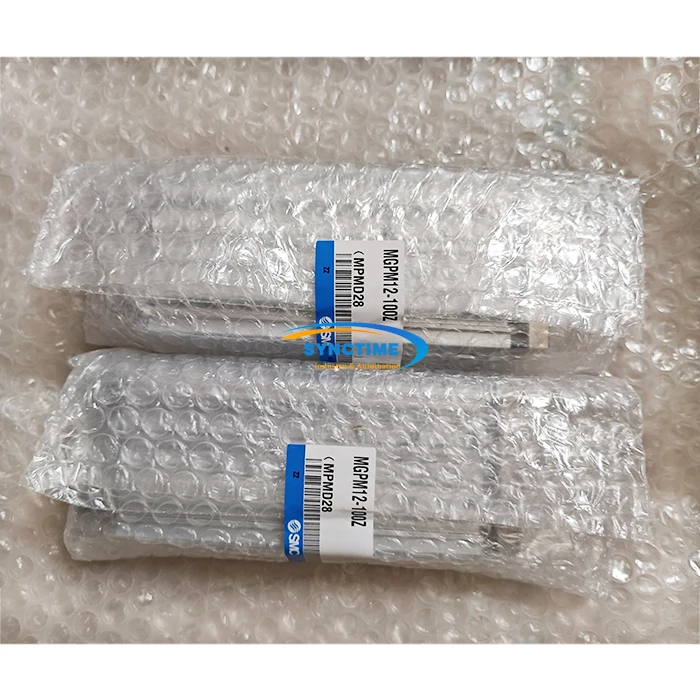
The MGPM12 - 100Z Cylinder is a bit different. It's a relatively compact cylinder, and its shorter height gives it an advantage in terms of stability. Since it has a lower profile, the leverage acting on it is reduced, and it can withstand minor disturbances without tipping.
In addition to the design features, the environment in which the cylinder is placed also affects its stability. If the surface is uneven, the cylinder may not be able to distribute its weight evenly, increasing the risk of tipping. Vibrations from nearby machinery can also have an impact. For example, in a factory where there are a lot of moving parts and heavy equipment, the vibrations can cause a cylinder to become unstable over time.
To ensure the stability of a standing cylinder, it's important to take proper installation measures. Make sure the surface is level and clean before placing the cylinder. If necessary, use mounting brackets or other securing devices to keep the cylinder in place. Regular maintenance is also crucial. Check for any signs of wear and tear on the cylinder, especially on the base and the mounting points. If there are any issues, address them promptly to prevent any problems with stability.
Now, you might be wondering why stability is such a big deal. Well, in industrial applications, an unstable cylinder can lead to all sorts of problems. It can cause damage to the cylinder itself, as well as to the surrounding equipment. It can also pose a safety risk to the workers in the area. For example, if a cylinder tips over in a manufacturing line, it could disrupt the production process and potentially cause injuries.
As a cylinder supplier, we understand the importance of stability, and that's why we offer a wide range of cylinders that are designed with stability in mind. Whether you need a cylinder for a small - scale project or a large - scale industrial application, we've got you covered.
If you're in the market for a reliable cylinder with excellent stability, we'd love to hear from you. We can help you choose the right cylinder for your specific needs and provide you with all the information you need to ensure proper installation and maintenance. Don't hesitate to reach out and start a conversation about your cylinder requirements.
References
- Engineering Mechanics: Statics and Dynamics textbooks for understanding center of gravity and stability concepts.
- Industry reports on pneumatic and fluid control systems for information on cylinder applications and stability requirements.
Send Inquiry