


What is the difference between a vertical and a horizontal cylinder?
Oct 03, 2025
Leave a message
Hey there! As a cylinder supplier, I often get asked about the differences between vertical and horizontal cylinders. It's a question that might seem simple at first, but there's actually a lot to unpack. So, let's dive right in and explore what sets these two types of cylinders apart.
Installation and Space Considerations
One of the most obvious differences between vertical and horizontal cylinders is how they're installed. Vertical cylinders are, well, installed vertically. This means they stand upright, taking up space in the vertical direction. On the other hand, horizontal cylinders are laid flat, using up space horizontally.
The choice between vertical and horizontal installation often comes down to the available space in your application. If you have a lot of floor space but limited height, a horizontal cylinder might be the way to go. For example, in a large factory floor where there's plenty of room to spread out, a horizontal cylinder can be easily integrated into the machinery without causing any height - related issues.
Conversely, if your workspace is tall but narrow, a vertical cylinder is a better option. In a multi - level manufacturing setup or a facility with limited floor space, a vertical cylinder can be installed between different levels, making the most of the vertical space. It's like choosing between stacking things up or laying them out side by side.
Force and Load Distribution
Another key difference lies in how the force and load are distributed within the cylinder. In a vertical cylinder, gravity plays a significant role. When the piston moves upwards, it has to work against gravity, which means the force required to lift the load is higher. However, when the piston moves downwards, gravity assists the movement, reducing the amount of force needed from the cylinder.
Let's say you're using a MGPM20 - 125Z Cylinder in a vertical application to lift a heavy object. The cylinder has to generate enough force to overcome the weight of the object and gravity when moving up. But when it's time to lower the object, the force from the cylinder can be reduced as gravity helps pull the object down.
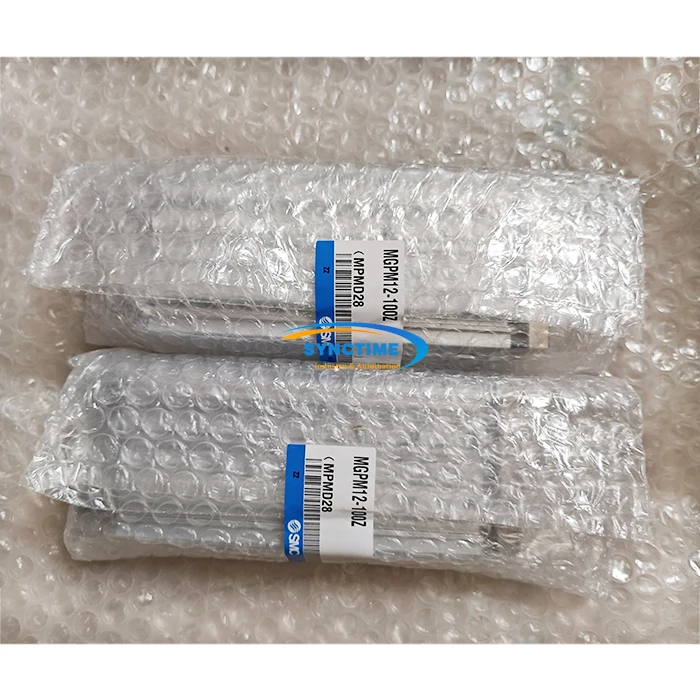
In a horizontal cylinder, gravity has a much less direct impact on the piston movement. The force required to move the piston is more consistent in both directions because there's no significant gravitational assistance or resistance. This makes horizontal cylinders more predictable in terms of force requirements, especially for applications where a constant force is needed throughout the stroke. For instance, in a conveyor system where a MGPM12 - 100Z Cylinder is used to push objects horizontally, the force needed to move the piston forward and backward remains relatively stable.
Lubrication and Maintenance
Lubrication is crucial for the smooth operation and longevity of any cylinder. In a vertical cylinder, the lubricant tends to flow downwards due to gravity. This can lead to uneven lubrication if not properly managed. The upper parts of the cylinder may not receive enough lubrication, which can cause increased friction and wear over time. To counter this, special lubrication systems or more frequent lubrication intervals might be required.
In a horizontal cylinder, the lubricant is more evenly distributed along the length of the cylinder. Since there's no strong gravitational pull in one direction, the lubricant can spread out more uniformly, providing better protection against friction and wear. This generally means that horizontal cylinders may require less frequent lubrication and have a lower risk of uneven wear.
Maintenance is also affected by the orientation. In a vertical cylinder, accessing the internal components for maintenance can be more challenging. You may need to use special equipment or platforms to reach the top of the cylinder. In contrast, a horizontal cylinder is usually easier to access, as all the components are at a more accessible height. This can save time and effort during maintenance and repair work.
Sealing and Leakage
Sealing is an important aspect of cylinder performance. In a vertical cylinder, the seals are subject to different stresses compared to a horizontal cylinder. The seals at the bottom of a vertical cylinder have to withstand the weight of the piston and any attached load, which can increase the risk of leakage over time. Additionally, the movement of the piston in a vertical direction can cause the seals to be compressed and expanded in a different way than in a horizontal cylinder.
In a horizontal cylinder, the seals are more evenly stressed during the piston movement. The lack of a significant gravitational load on the seals reduces the risk of premature wear and leakage. This makes horizontal cylinders generally more reliable in terms of sealing performance, especially in applications where leakage can cause significant problems, such as in a hydraulic or pneumatic system where even a small leak can lead to a loss of pressure and reduced efficiency.
Application Suitability
The differences between vertical and horizontal cylinders make them suitable for different types of applications. Vertical cylinders are commonly used in applications where lifting or lowering loads is required, such as in elevators, hoists, and some types of presses. They are also well - suited for applications where the vertical movement can be integrated easily into the overall machinery design, like in some automated storage and retrieval systems.
Horizontal cylinders, on the other hand, are often used in applications where linear pushing or pulling is needed, such as in conveyor systems, robotic arms, and some types of clamping mechanisms. Their consistent force output and easier installation in a horizontal workspace make them ideal for these types of applications. For example, a CD85N25 - 200C - B Cylinder can be effectively used in a horizontal conveyor system to push products along the line.
Cost and Efficiency
When it comes to cost, there are a few factors to consider. Vertical cylinders may require more powerful actuators to overcome gravity, which can increase the initial cost. Additionally, the need for more frequent lubrication and potentially more complex maintenance can add to the long - term cost.
Horizontal cylinders, with their more even force distribution and better sealing performance, can be more energy - efficient in the long run. They may also require less maintenance, which can result in lower overall costs over the life of the cylinder. However, the initial cost of a horizontal cylinder can vary depending on its size, features, and the specific application requirements.
In conclusion, the choice between a vertical and a horizontal cylinder depends on a variety of factors, including available space, force requirements, lubrication and maintenance needs, sealing performance, application suitability, and cost. As a cylinder supplier, I'm here to help you make the right choice for your specific application. Whether you need a vertical cylinder for a lifting task or a horizontal cylinder for a pushing application, we have a wide range of high - quality cylinders to meet your needs.
If you're interested in learning more about our cylinders or need help in selecting the right one for your project, don't hesitate to reach out. We're always ready to have a detailed discussion and guide you through the procurement process. Let's work together to find the perfect cylinder solution for your business!

References
- Pneumatic and Hydraulic Cylinder Handbook
- Industrial Machinery Design and Application Manual
Send Inquiry