


What is the difference between a single - stage regulator and a two - stage regulator?
Jan 16, 2026
Leave a message
As a supplier of valves and regulators, I often encounter customers who are confused about the differences between single - stage regulators and two - stage regulators. In this blog, I'll break down these differences to help you make an informed decision for your specific needs.
Basic Working Principles
Single - Stage Regulators
A single - stage regulator is a relatively straightforward device. It uses a single diaphragm and a spring - loaded mechanism to control the output pressure. When the inlet pressure changes, the diaphragm moves in response to the pressure difference between the inlet and the outlet. The spring provides a counter - force to maintain the desired output pressure.
For example, if you have a high - pressure gas source and you want to reduce it to a lower, stable pressure for your application, the single - stage regulator will try to do this in one step. However, its performance can be affected by changes in the inlet pressure. As the inlet pressure drops, the output pressure may also decrease slightly, especially if the regulator is under a heavy load.
Two - Stage Regulators
Two - stage regulators, on the other hand, have a more complex design. They consist of two separate regulating chambers. The first stage reduces the high inlet pressure to an intermediate pressure, and the second stage further reduces this intermediate pressure to the final output pressure.
This two - step process allows for better pressure regulation. The first stage absorbs most of the fluctuations in the inlet pressure, and the second stage fine - tunes the output pressure. As a result, two - stage regulators can maintain a more stable output pressure even when the inlet pressure varies significantly.
Pressure Stability
Single - Stage Regulators
The pressure stability of single - stage regulators is relatively limited. They are more sensitive to changes in the inlet pressure and the flow rate. When the inlet pressure fluctuates, the output pressure can deviate from the set value. For instance, if you are using a single - stage regulator to supply gas to a system with varying flow demands, the output pressure may drop when the flow rate increases.
This instability can be a problem in applications where precise pressure control is crucial, such as in laboratory equipment or some industrial processes. However, in applications where a small variation in pressure is acceptable, single - stage regulators can still be a cost - effective choice.
Two - Stage Regulators
Two - stage regulators offer superior pressure stability. They can maintain a constant output pressure over a wide range of inlet pressures and flow rates. This is because the first stage acts as a buffer, reducing the impact of inlet pressure changes on the second stage.
For example, in a medical gas delivery system, where a stable pressure is essential for patient safety, a two - stage regulator is often the preferred choice. It ensures that the gas is delivered at a consistent pressure, regardless of the pressure in the gas supply tank or the flow rate required by the patient.
Flow Capacity
Single - Stage Regulators
Single - stage regulators generally have a lower flow capacity compared to two - stage regulators. Their design is more suitable for applications with relatively low flow rates. When the flow rate increases, the single - stage regulator may struggle to maintain the desired output pressure.
This is because the diaphragm and spring mechanism in a single - stage regulator may not be able to respond quickly enough to the increased demand. As a result, the output pressure may drop, and the regulator may become less efficient.
Two - Stage Regulators
Two - stage regulators can handle higher flow rates more effectively. The two - stage design allows for a more efficient distribution of the pressure reduction process. The first stage can handle the initial pressure drop, and the second stage can focus on fine - tuning the output pressure for the required flow rate.
In industrial applications where large volumes of gas or fluid need to be regulated, such as in chemical processing plants or power generation facilities, two - stage regulators are often used to ensure that the system can operate at high flow rates without sacrificing pressure stability.
Cost Considerations
Single - Stage Regulators
Single - stage regulators are typically less expensive than two - stage regulators. Their simpler design and fewer components result in lower manufacturing costs. This makes them an attractive option for applications where cost is a major concern and where the requirements for pressure stability and flow capacity are not extremely high.
For example, in some small - scale DIY projects or low - budget industrial applications, a single - stage regulator can provide a basic level of pressure control at a reasonable price.
Two - Stage Regulators
Two - stage regulators are more expensive due to their more complex design and higher performance capabilities. However, the additional cost is often justified in applications where precise pressure control and high flow capacity are required.
In the long run, the use of a two - stage regulator can also lead to cost savings. By providing a more stable pressure, it can reduce the wear and tear on downstream equipment, improve the efficiency of the system, and minimize the risk of product defects or process failures.
Applications
Single - Stage Regulators
Single - stage regulators are commonly used in applications where the pressure requirements are not very strict. Some examples include:
- Home gas appliances: Such as gas stoves and water heaters. In these applications, a small variation in pressure does not significantly affect the performance of the appliance.
- Low - flow pneumatic tools: Tools like airbrushes or small nail guns that do not require a large volume of compressed air and can tolerate some pressure fluctuations.
Two - Stage Regulators
Two - stage regulators are preferred in applications where precise pressure control is essential. Some common applications include:
- Medical equipment: As mentioned earlier, in medical gas delivery systems, a stable pressure is crucial for patient safety.
- Analytical instruments: In laboratories, instruments like gas chromatographs and mass spectrometers require a constant gas pressure to ensure accurate results.
- High - precision industrial processes: Such as semiconductor manufacturing, where even a small variation in pressure can affect the quality of the final product.
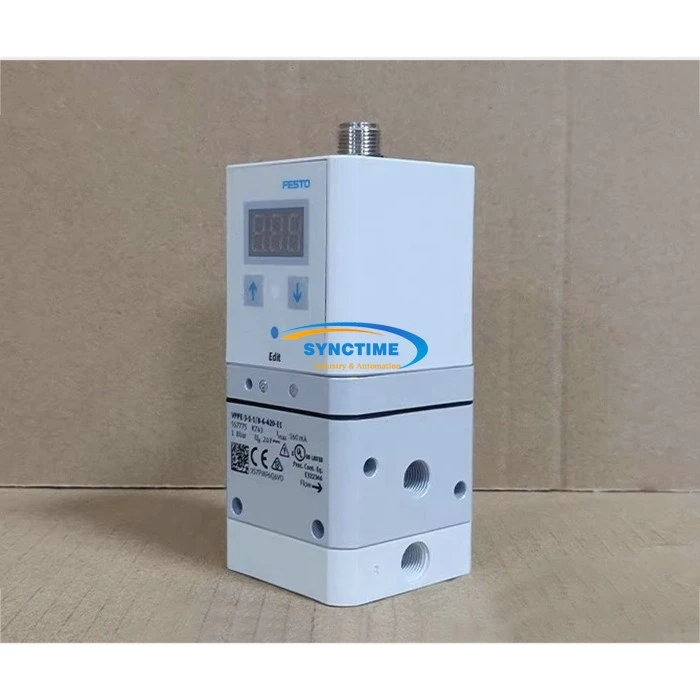
Our Product: VPPE - 3 - 1 - 1/8 - 6 - 010 - E1 Regulator
We offer a wide range of regulators, including the VPPE - 3 - 1 - 1/8 - 6 - 010 - E1 Regulator. This regulator is designed to meet the diverse needs of our customers. Whether you need a single - stage or a two - stage regulator, we can provide you with the right solution.
Our regulators are manufactured with high - quality materials and advanced technology to ensure reliable performance. They are rigorously tested to meet industry standards and can be customized to fit your specific requirements.
Conclusion
In summary, the main differences between single - stage and two - stage regulators lie in their working principles, pressure stability, flow capacity, cost, and applications. Single - stage regulators are simpler and more cost - effective but offer limited pressure stability and flow capacity. Two - stage regulators, on the other hand, provide superior pressure control and can handle higher flow rates but are more expensive.
When choosing a regulator for your application, it's important to consider your specific requirements, such as the required pressure stability, flow rate, and budget. If you have any questions or need further assistance in selecting the right regulator, please feel free to contact us. We are here to help you make the best decision for your project.

References
- "Pneumatic Systems Handbook" by John C. Parr
- "Industrial Gas Regulators: Principles and Applications" by David S. Miller
Send Inquiry