


What is a light sensor?
Oct 15, 2025
Leave a message
A light sensor, also known as a photodetector, is a device that detects light and converts its energy into an electrical signal. These sensors are widely used in various industries and applications due to their ability to measure light intensity, presence, or absence. As a sensor supplier, I'm excited to delve into the details of light sensors, their types, applications, and how our products can meet your specific needs.
How Light Sensors Work
Light sensors operate based on the principle of the photoelectric effect. When light photons strike the sensor's surface, they transfer their energy to electrons in the material. If the energy of the photons is sufficient, the electrons are released from their atomic bonds, creating an electric current. The magnitude of this current is proportional to the intensity of the incident light.
There are several types of light sensors, each with its own unique working mechanism and characteristics.
Types of Light Sensors
Photodiodes
Photodiodes are semiconductor devices that generate a current when exposed to light. They are typically made of silicon or germanium and have a p-n junction. When light photons are absorbed by the semiconductor material, electron-hole pairs are created. These pairs are then separated by the built-in electric field of the p-n junction, resulting in a flow of current. Photodiodes are fast, sensitive, and have a wide spectral response. They are commonly used in optical communication systems, light meters, and solar panels.
Phototransistors
Phototransistors are similar to photodiodes but have an additional transistor structure. The base of the transistor is sensitive to light, and when light is incident on it, a small current is generated. This current is then amplified by the transistor, resulting in a larger output current. Phototransistors are more sensitive than photodiodes but have a slower response time. They are often used in applications where high sensitivity is required, such as infrared detectors and proximity sensors.
Photoresistors
Photoresistors, also known as light-dependent resistors (LDRs), are passive components whose resistance changes with the intensity of light. They are made of a semiconductor material with a high resistance in the dark. When light is incident on the photoresistor, the photons provide energy to the electrons in the material, allowing them to move more freely. This reduces the resistance of the photoresistor. Photoresistors are inexpensive and easy to use but have a relatively slow response time and a non-linear response. They are commonly used in light control circuits, such as automatic street lights and camera exposure controls.
Photovoltaic Cells
Photovoltaic cells, also known as solar cells, are devices that convert light energy directly into electrical energy. They are made of semiconductor materials, such as silicon, and have a p-n junction. When light photons are absorbed by the semiconductor material, electron-hole pairs are created. These pairs are then separated by the built-in electric field of the p-n junction, resulting in a flow of current. Photovoltaic cells are used to generate electricity from sunlight and are widely used in solar power systems.

Applications of Light Sensors
Light sensors have a wide range of applications in various industries. Here are some examples:
Consumer Electronics
Light sensors are used in many consumer electronic devices, such as smartphones, tablets, and laptops. They are used to adjust the screen brightness based on the ambient light conditions, improving the user experience and reducing power consumption. Light sensors are also used in digital cameras to measure the light intensity and adjust the exposure settings.
Automotive Industry
In the automotive industry, light sensors are used for various applications, such as automatic headlight control, rain sensors, and ambient light sensors. Automatic headlight control systems use light sensors to detect the ambient light level and turn on the headlights when it gets dark. Rain sensors use light sensors to detect the presence of rain on the windshield and activate the windshield wipers. Ambient light sensors are used to adjust the interior lighting of the vehicle based on the outside light conditions.
Industrial Automation
Light sensors are widely used in industrial automation for object detection, position sensing, and quality control. For example, in a conveyor belt system, light sensors can be used to detect the presence of objects on the belt and trigger appropriate actions, such as sorting or packaging. In a manufacturing process, light sensors can be used to measure the dimensions of objects and ensure that they meet the required specifications.
Environmental Monitoring
Light sensors are used in environmental monitoring applications to measure the light intensity and quality in different environments. For example, in a greenhouse, light sensors can be used to monitor the light levels and adjust the artificial lighting to provide the optimal growing conditions for plants. In a smart city, light sensors can be used to monitor the street lighting and adjust the brightness based on the traffic and pedestrian flow.
Our Sensor Products
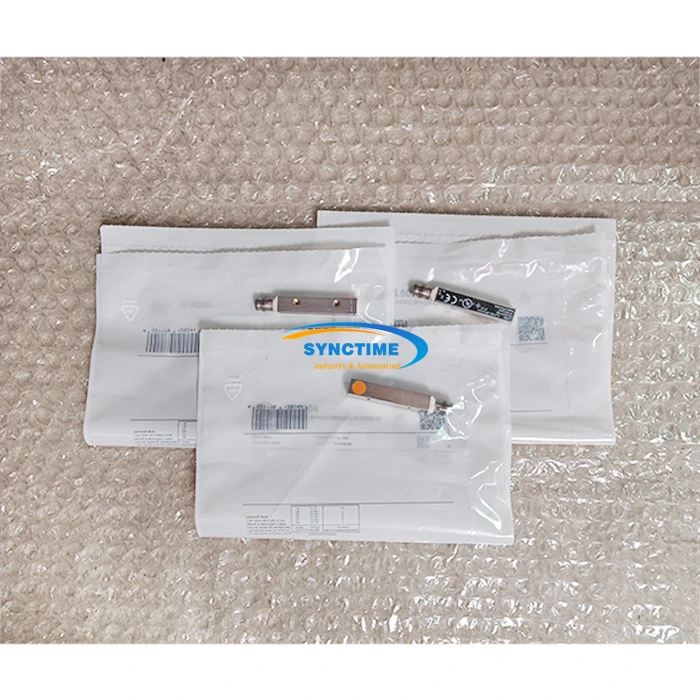
As a sensor supplier, we offer a wide range of light sensors to meet the diverse needs of our customers. Our products include E3JK-RR11-C 2M OMS Sensor, IL5004 Inductive Sensor, and IE5338 Sensor.
The E3JK-RR11-C 2M OMS Sensor is a high-performance optical sensor with a long sensing distance of 2 meters. It is suitable for various industrial applications, such as object detection and position sensing. The IL5004 Inductive Sensor is an inductive sensor that can detect metallic objects without contact. It is widely used in industrial automation for object detection and position sensing. The IE5338 Sensor is a high-precision sensor that can measure the distance and position of objects with high accuracy. It is suitable for applications where high precision is required, such as robotics and machine vision.
Contact Us for Procurement
If you are interested in our sensor products or have any specific requirements, please feel free to contact us for procurement and further discussion. Our team of experts is ready to provide you with professional advice and support to help you find the best sensor solutions for your applications.
References
- "Photodetectors and Their Applications" by Richard J. Mynatt
- "Industrial Sensors: Theory, Applications, and Troubleshooting" by Joseph F. Wujek
- "Light Sensors: Principles, Types, and Applications" by Electronics Tutorials
Send Inquiry