


What are the types of magnetic sensors?
Oct 21, 2025
Leave a message
Magnetic sensors are essential components in various industries, playing a crucial role in detecting magnetic fields and converting them into electrical signals. As a sensor supplier, I have in - depth knowledge of different types of magnetic sensors and their applications. In this blog, I will introduce you to the main types of magnetic sensors, their working principles, and their typical use cases.
Hall - effect Sensors
Hall - effect sensors are among the most commonly used magnetic sensors. They operate based on the Hall effect, which was discovered by Edwin Hall in 1879. When a magnetic field is applied perpendicular to the flow of current in a conductor or semiconductor, a voltage (Hall voltage) is generated across the conductor perpendicular to both the current and the magnetic field.
The basic structure of a Hall - effect sensor consists of a thin strip of semiconductor material through which a current is passed. When a magnetic field is present, the Lorentz force acts on the charge carriers in the semiconductor, causing them to accumulate on one side of the strip. This creates a potential difference, or Hall voltage, that can be measured.
One of the key advantages of Hall - effect sensors is their non - contact operation. They can detect the presence, strength, and direction of a magnetic field without physical contact, which makes them suitable for applications where wear and tear due to mechanical contact is a concern. For example, they are widely used in automotive applications for speed sensing in wheel speed sensors, throttle position sensing, and gear position sensing. In industrial automation, Hall - effect sensors are used for proximity sensing, position sensing, and current sensing.
Magnetoresistive Sensors
Magnetoresistive sensors work on the principle that the electrical resistance of certain materials changes when they are exposed to a magnetic field. There are different types of magnetoresistive sensors, including anisotropic magnetoresistive (AMR), giant magnetoresistive (GMR), and tunneling magnetoresistive (TMR) sensors.
AMR sensors are based on the fact that the resistance of a ferromagnetic material changes depending on the angle between the direction of the current flow and the magnetization direction of the material. They are relatively simple and cost - effective, and are used in applications such as compasses, position sensors, and magnetic encoders.
GMR sensors, on the other hand, exhibit a much larger change in resistance compared to AMR sensors. They consist of multiple layers of magnetic and non - magnetic materials. When a magnetic field is applied, the relative orientation of the magnetization in the magnetic layers changes, which leads to a significant change in the electrical resistance of the sensor. GMR sensors are used in high - sensitivity applications such as hard disk drives for reading data from the disk, and in some automotive and industrial sensing applications.
TMR sensors have an even higher sensitivity than GMR sensors. They operate based on the quantum mechanical tunneling effect. In a TMR sensor, a thin insulating layer is sandwiched between two ferromagnetic layers. The tunneling current through the insulating layer depends on the relative magnetization direction of the two ferromagnetic layers. TMR sensors are used in applications that require extremely high sensitivity, such as magnetic random - access memory (MRAM) and some advanced magnetic sensing applications.
Inductive Sensors
Inductive sensors use the principle of electromagnetic induction to detect the presence of a magnetic field or a metallic object. When a conductive object is placed in the vicinity of an alternating magnetic field generated by a coil in the sensor, eddy currents are induced in the object. These eddy currents, in turn, generate their own magnetic field that opposes the original magnetic field, causing a change in the impedance of the coil.
The change in impedance can be detected and used to determine the presence, position, or proximity of the metallic object. Inductive sensors are typically used for detecting metallic objects in industrial automation, such as in conveyor systems for object detection, in machine tools for tool position sensing, and in packaging machines for detecting the presence of metal parts.
One of the limitations of inductive sensors is that they can only detect metallic objects. They are not suitable for detecting non - metallic materials such as plastics or wood. However, they offer high reliability and long - term stability, making them a popular choice in many industrial applications.
Fluxgate Sensors
Fluxgate sensors are highly sensitive magnetic field sensors that are capable of measuring both the magnitude and direction of a magnetic field. They consist of a ferromagnetic core that is driven into saturation by an alternating current in a primary coil. When an external magnetic field is present, it modifies the saturation characteristics of the core, which results in a change in the magnetic flux in the core.
A secondary coil is used to detect the changes in the magnetic flux. The output of the secondary coil is a signal that is proportional to the external magnetic field. Fluxgate sensors are commonly used in applications where high - precision magnetic field measurements are required, such as in geophysical surveys for detecting magnetic anomalies in the Earth's crust, in aerospace applications for attitude determination, and in navigation systems for compassing.
Applications and Our Product Offerings
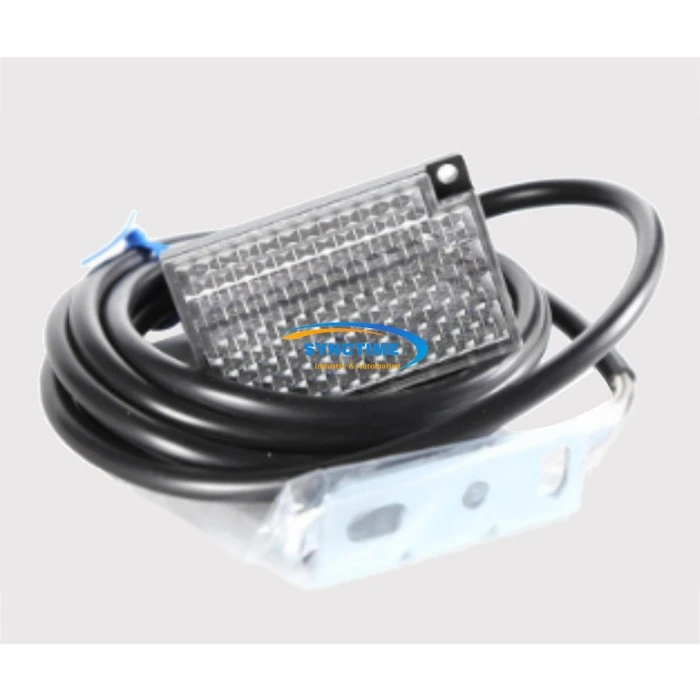
Each type of magnetic sensor has its own unique characteristics and is suitable for different applications. As a sensor supplier, we offer a wide range of magnetic sensors to meet the diverse needs of our customers. For example, we have the E3JK - RR11 - C 2M OMS Sensor, which can be used in various industrial automation applications for proximity sensing. This sensor is known for its high reliability and long - range detection capabilities.
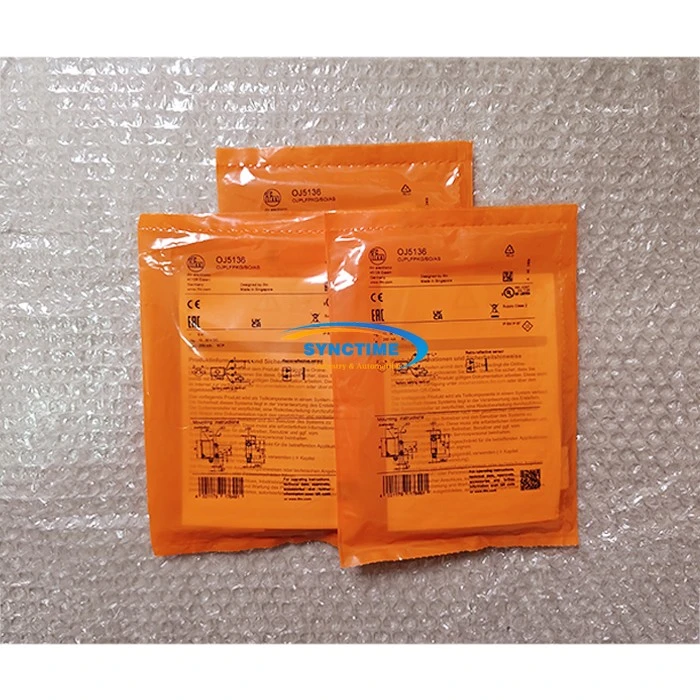
Our 0J5136 Sensor is another excellent product. It is a versatile sensor that can be used in different types of magnetic field sensing applications, offering accurate and stable performance.
The E2B - M12KN08 - WZ - B1 Sensor is a high - quality inductive sensor that is suitable for detecting metallic objects in industrial environments. It has a robust design and can withstand harsh operating conditions.
Conclusion
Magnetic sensors are an integral part of modern technology, enabling a wide range of applications in automotive, industrial automation, aerospace, and consumer electronics. Understanding the different types of magnetic sensors and their working principles is essential for selecting the right sensor for a specific application.
As a sensor supplier, we are committed to providing high - quality magnetic sensors and excellent customer service. Whether you are looking for a sensor for a new product development or need to replace an existing sensor, we have the expertise and the product range to meet your requirements. If you are interested in our magnetic sensors or have any questions about sensor selection and application, please feel free to contact us for procurement and further discussion.
References
- Hall, E. H. (1879). On a new action of the magnet on electric currents. American Journal of Mathematics, 2(3), 287 - 292.
- Prinz, G. A. (1995). Magnetoresistive sensors. Journal of Magnetism and Magnetic Materials, 148(1 - 2), 178 - 192.
- Dodd, C. V., & Deeds, W. E. (1968). Analytical solutions to eddy - current probe - coil problems. Journal of Applied Physics, 39(6), 2829 - 2838.
- Ripka, P. (2001). Fluxgate sensors. Sensors and Actuators A: Physical, 91(1 - 3), 115 - 131.
Send Inquiry