


How does the inertia of an encoder affect the system?
Dec 05, 2025
Leave a message
Hey there! As an encoder supplier, I've seen firsthand how the inertia of an encoder can have a huge impact on a system. In this blog post, I'm gonna break down what encoder inertia is, why it matters, and how it affects different types of systems.
Let's start with the basics. Encoder inertia is the resistance of an encoder to changes in its rotational motion. Think of it like a spinning top - the heavier and larger the top, the more force it takes to start it spinning and the more force it takes to stop it. In the case of an encoder, inertia is determined by factors like the mass and shape of the encoder's rotating components, such as the shaft and the disc.
So, why does encoder inertia matter? Well, in a nutshell, it can affect the performance and accuracy of a system. When an encoder has high inertia, it can be slower to respond to changes in the system's motion. This means that there might be a delay between when the system moves and when the encoder accurately measures that movement. For example, in a servo motor control system, if the encoder has too much inertia, the motor might overshoot or undershoot its target position because the encoder can't keep up with the rapid changes in the motor's speed and direction.
On the other hand, if the encoder has low inertia, it can respond more quickly to changes in motion. This is great for systems that require high - speed and high - precision control, like robotics and CNC machines. A low - inertia encoder can provide more accurate and timely feedback, allowing the system to make adjustments faster and operate more efficiently.
Now, let's take a look at how encoder inertia affects different types of systems.
1. Servo Motor Systems
Servo motors are used in a wide range of applications, from industrial automation to aerospace. These systems rely on encoders to provide feedback on the motor's position, speed, and torque. In a servo motor system, encoder inertia can have a significant impact on the system's dynamic response.
If the encoder inertia is too high relative to the motor's inertia, it can cause the system to become unstable. The motor might have trouble accelerating and decelerating smoothly, leading to vibrations and inaccuracies in the system's motion. For instance, in a robotic arm that uses a servo motor for joint movement, a high - inertia encoder could make the arm move jerkily, affecting its ability to perform precise tasks.
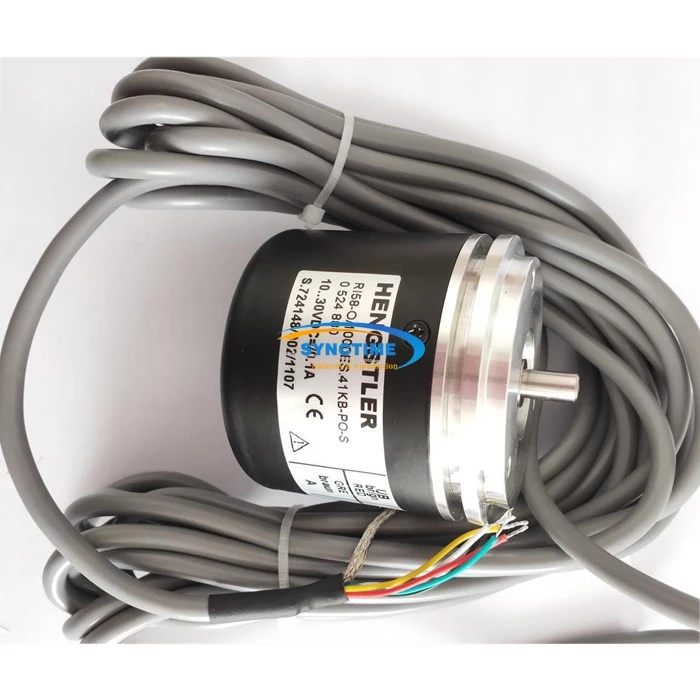
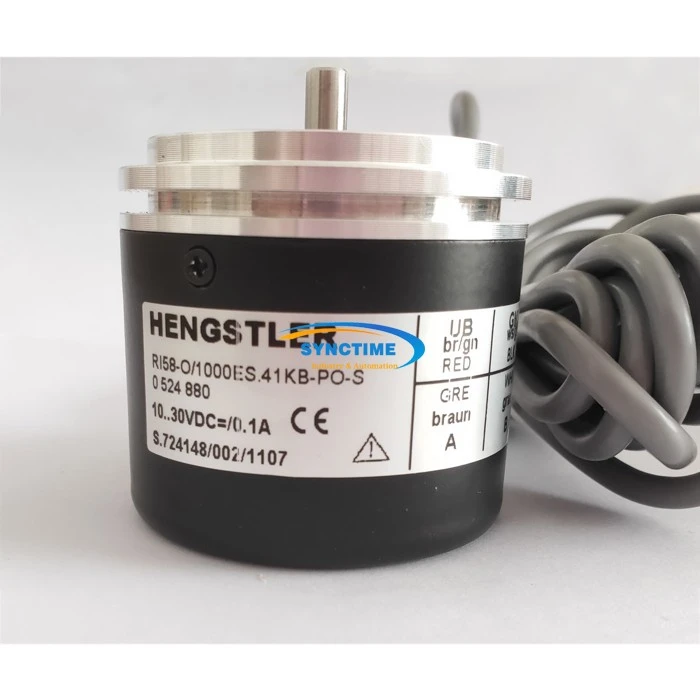
To ensure optimal performance in a servo motor system, it's important to choose an encoder with an appropriate level of inertia. For high - speed servo applications, a low - inertia encoder like the RI58 - O/1000ES.41KB - PO - S 0 524 880 Encoder Hengstler can be a great choice. This encoder is designed to provide fast and accurate feedback, allowing the servo motor to respond quickly to changes in the system.
2. CNC Machines
CNC (Computer Numerical Control) machines are used for precision machining operations, such as milling, turning, and drilling. These machines require high - precision encoders to ensure accurate positioning of the cutting tools. Encoder inertia plays a crucial role in the performance of CNC machines.
In a CNC machine, the encoder is used to measure the position of the machine's axes. If the encoder has high inertia, it can cause errors in the machine's positioning, leading to poor - quality finished products. For example, if the encoder on the X - axis of a CNC milling machine has too much inertia, the machine might not be able to accurately cut a part to the desired dimensions.
A low - inertia encoder, like the TS6014N135 AR38 - 2500P8 - L6 - 5V Rotary Encoder, can help improve the accuracy and efficiency of a CNC machine. This encoder can quickly and accurately measure the movement of the machine's axes, allowing the control system to make precise adjustments in real - time.
3. Robotics
Robots are becoming increasingly common in industrial and consumer applications. Encoders are used in robots to provide feedback on the position and movement of the robot's joints and limbs. In robotics, encoder inertia can affect the robot's agility, speed, and precision.
High - inertia encoders can slow down a robot's movement and make it less responsive. This can be a problem in applications where the robot needs to perform fast and precise movements, such as pick - and - place operations. A robot with a high - inertia encoder might take longer to reach a target position, reducing its overall productivity.
A low - inertia encoder, such as the TS5214N8566 OIH48 - 2500P8 - L6 - 5V Encoder, can enhance the robot's performance. It can provide accurate and timely feedback, allowing the robot to move more smoothly and efficiently.
When choosing an encoder for a specific application, it's important to consider not only the inertia but also other factors like resolution, accuracy, and environmental conditions. For example, in a harsh industrial environment, you might need an encoder that is rugged and resistant to dust, moisture, and vibration.
In conclusion, the inertia of an encoder can have a profound impact on the performance of a system. Whether you're working with servo motor systems, CNC machines, or robotics, choosing the right encoder with the appropriate level of inertia is crucial for achieving optimal results.
If you're in the market for an encoder and need help choosing the right one for your application, don't hesitate to reach out. Our team of experts is here to assist you in selecting the best encoder based on your specific requirements. We can provide you with detailed information about our products and help you make an informed decision. Contact us today to start a discussion about your encoder needs and let's work together to improve the performance of your system.
References
- Encoder Handbook: A Guide to Encoder Technology and Applications
- Servo Motor Control Theory and Practice
- Robotics: Mechanics and Control
Send Inquiry