


Can an HMI touch screen be used in a food processing industry?
Oct 13, 2025
Leave a message
As a supplier of HMI touch screens, I often get asked whether our products can be used in the food processing industry. The answer is a resounding yes, and in this blog post, I'll explain why HMI touch screens are not only suitable but also highly beneficial in this sector.
The Demands of the Food Processing Industry
The food processing industry has unique requirements that any equipment must meet. First and foremost, hygiene is of utmost importance. Food processing facilities are subject to strict regulations regarding cleanliness to prevent contamination and ensure the safety of the products. Equipment used in these environments must be easy to clean and resistant to the chemicals commonly used in sanitation procedures.
Secondly, reliability is crucial. Downtime in food processing can lead to significant losses, both in terms of product spoilage and missed production targets. HMI touch screens need to be able to operate continuously under demanding conditions without frequent breakdowns.
Another key factor is the need for user - friendly interfaces. Workers in food processing plants often have to operate multiple machines and processes simultaneously. An intuitive HMI touch screen can simplify these operations, reducing the learning curve and minimizing the chances of human error.
Advantages of HMI Touch Screens in Food Processing
1. Hygiene and Cleanability
Modern HMI touch screens are designed with materials that are easy to clean and disinfect. For example, many of our touch screens feature smooth, non - porous surfaces that prevent the accumulation of dirt, bacteria, and food particles. They can withstand regular cleaning with harsh detergents and disinfectants commonly used in the food industry. This helps maintain a clean and safe working environment, which is essential for food safety.
2. Process Monitoring and Control
HMI touch screens provide real - time monitoring and control of food processing equipment. Operators can easily view and adjust parameters such as temperature, pressure, and flow rates directly from the touch screen. This allows for precise control of the production process, ensuring consistent product quality. For instance, in a bakery, an HMI touch screen can be used to monitor the baking temperature and time, ensuring that each batch of bread is baked to perfection.
3. Recipe Management
In food processing, different products often require different recipes. HMI touch screens can store and manage a large number of recipes, making it easy for operators to switch between different production runs. This not only saves time but also reduces the risk of errors associated with manual recipe entry. For example, a beverage manufacturer can use an HMI touch screen to quickly select the recipe for a particular flavor of soda, adjusting the ingredient proportions accordingly.
4. Data Logging and Traceability
HMI touch screens can log important production data, such as production times, equipment status, and quality control results. This data can be used for traceability purposes, which is becoming increasingly important in the food industry. In the event of a product recall, the data logged by the HMI touch screen can help identify the source of the problem and track the affected products throughout the supply chain.
Our HMI Touch Screen Products for the Food Processing Industry
We offer a range of HMI touch screen products that are well - suited for the food processing industry.
The A951GOT - SBD Touch Screen is a high - performance touch screen with a large, clear display. It is built with durable materials that can withstand the rigors of a food processing environment. Its intuitive interface makes it easy for operators to access and control various functions, even in a fast - paced production setting.
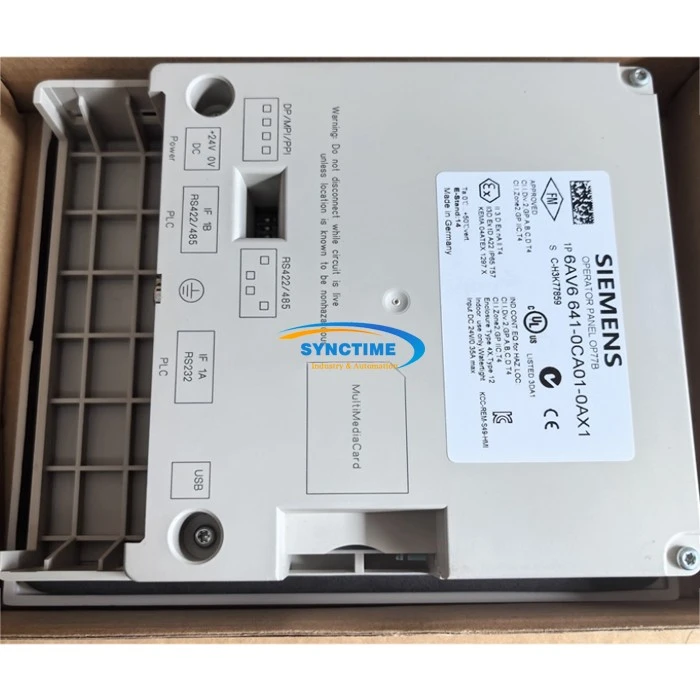
The 6AV6641 - 0CA01 - 0AX0 6AV6641 - 0CA01 - 0AX1 Operator Panel OP77B is another excellent choice. It offers a compact design without sacrificing functionality. This touch screen is known for its reliability and ease of use, making it ideal for smaller food processing operations or as a control panel for specific equipment.
The GLC2300 - LG41 - 24V Touch Screen is designed for high - end applications in the food industry. It features advanced connectivity options, allowing it to integrate seamlessly with other production systems. With its high - resolution display and powerful processing capabilities, it can handle complex monitoring and control tasks with ease.

Case Studies
Let's take a look at some real - world examples of how HMI touch screens have been successfully used in the food processing industry.
A large dairy processing plant was facing challenges with inconsistent product quality and high maintenance costs due to outdated control systems. After installing our HMI touch screens, operators were able to monitor and adjust the pasteurization process more accurately. The real - time data logging feature also helped the plant identify and address potential issues before they affected product quality. As a result, the plant saw a significant improvement in product quality and a reduction in maintenance costs.
A snack food manufacturer was struggling with slow changeover times between different product runs. By implementing our HMI touch screens with recipe management capabilities, the manufacturer was able to reduce changeover times by up to 50%. This not only increased production efficiency but also allowed the company to respond more quickly to market demands.
Conclusion
In conclusion, HMI touch screens are an excellent choice for the food processing industry. They offer numerous advantages in terms of hygiene, process control, recipe management, and data logging. Our range of HMI touch screen products, such as the A951GOT - SBD Touch Screen, 6AV6641 - 0CA01 - 0AX0 6AV6641 - 0CA01 - 0AX1 Operator Panel OP77B, and GLC2300 - LG41 - 24V Touch Screen, are specifically designed to meet the unique needs of this sector.
If you are in the food processing industry and are looking for a reliable and user - friendly HMI touch screen solution, we would love to discuss your requirements. Contact us to start a conversation about how our products can improve your production processes and enhance the quality of your food products.
References
- "Food Processing Technology: Principles and Practice" by P. Fellows
- "Industrial Automation and Control Systems" by R. Dorf
Send Inquiry